Trekking, 4x4 Expeditions, and Nomadic Traditions in the Moroccan Sahara
<<<<<<< HEADApril 16, 2026
Key Highlights:
● Independent travel and private routes allow deeper access to remote dune systems and lesser-visited regions.
● Adventure activities such as 4x4 expeditions, sandboarding, and desert trekking provide more dynamic engagement with the landscape.
● Cultural immersion with Berber communities reveals the human dimension of desert life often missed by standard tours.

Estimated Reading Time: 12–15 minutes┃ Post by: Elias Navarro
Morocco’s tourism sector is expanding rapidly, with the country receiving nearly 19.8 million visitors in 2025 and aiming for continued growth through diversification of experiences. Within this ecosystem, the Sahara has evolved from a single-activity destination into a multi-layered environment where culture, geography, and adventure intersect.
Exploring beyond camel tours requires a shift in mindset. Instead of viewing the desert as a static backdrop, travelers should approach it as a dynamic system shaped by trade routes, nomadic traditions, and ecological constraints. This perspective unlocks experiences that are both more authentic and more intellectually engaging.
4x4 Expeditions and Off-Road Exploration
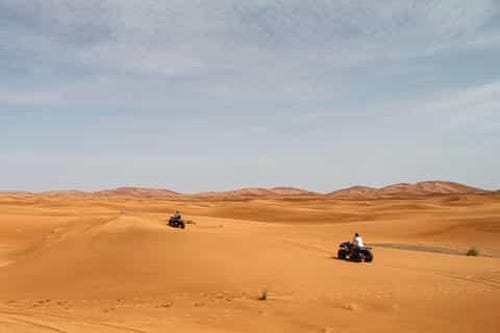
Motorized desert exploration represents a significant departure from the slow, linear movement of camel caravans. 4x4 expeditions enable access to terrain that would otherwise be unreachable, including dry lake beds, fossil fields, and expansive dune systems.
Technically, navigating the Sahara requires specialized knowledge. Sand conditions change throughout the day, and improper driving techniques can lead to immobilization or equipment damage. For this reason, even experienced travelers often rely on local drivers who understand the terrain.
The advantage of 4x4 travel lies in its spatial reach. Instead of following predetermined routes, travelers can explore multiple micro-environments within a single day. This includes rocky hamadas, salt flats, and shifting dune formations. Each of these landscapes reflects different geological processes, offering a more comprehensive understanding of the desert.

From a safety standpoint, Morocco is generally considered a secure destination for tourists, including in desert regions, provided that standard precautions are observed . Engaging knowledgeable guides further mitigates risks associated with navigation and environmental exposure.
Typical routes include:
● Fossil fields near Erfoud and Rissani
● Dry lakebeds such as Dayet Srji
● Hammada (rock desert) zones outside Erg Chebbi
● Remote Berber settlements and nomadic encampments
These expeditions often operate as half-day to multi-day circuits and serve as logistical connectors between dunes, oases, and desert towns. Standard vehicles are typically Toyota Land Cruisers or equivalent 4WD platforms equipped for soft sand and rocky terrain navigation.
Trekking and Slow Desert Travel
For those seeking a more immersive experience, multi-day trekking offers a compelling alternative. Unlike camel tours, which often follow fixed itineraries, trekking routes can be adapted to specific interests and fitness levels.
Walking through the Sahara reveals details that are otherwise overlooked. Subtle variations in sand texture, wind patterns, and vegetation become more apparent at a slower pace. This mode of travel also fosters a stronger connection to the environment, as travelers must engage directly with the physical challenges of the landscape.

Logistically, trekking requires careful preparation. Water management, navigation, and weather awareness are critical factors. Nighttime temperatures can drop significantly, even when daytime conditions are warm. Optimal travel periods are typically spring and autumn, when temperatures are more moderate .
The experiential payoff is substantial. Trekking transforms the Sahara from a visual spectacle into a lived environment, where time, distance, and effort are directly perceived.
Adventure Activities Beyond the Expected
The Sahara’s physical characteristics make it suitable for a range of adventure activities that extend beyond traditional narratives. Sandboarding, for example, leverages the steep slopes of dunes to create a desert analogue of snowboarding. Core characteristics:
● Equipment: waxed sandboards (often provided by camps)
● Optimal time: early morning or late afternoon (sand temperature and density balance)
● Technique similarity: snowboarding mechanics but with increased friction coefficients due to granular substrate
According to regional activity guides, sandboarding is frequently bundled with sunset camel experiences and overnight camping, forming hybrid adventure packages rather than standalone activities. This integration reflects a broader trend: experiential layering rather than single-activity tourism.

Similarly, endurance-based activities such as desert marathons and cycling expeditions have gained popularity among niche travel segments. These activities require significant preparation but offer a unique way to engage with the environment.
The Sahara’s astronomical clarity is one of its least commercialized but most significant assets. The absence of light pollution in regions like Erg Chebbi produces visibility conditions that allow direct observation of the Milky Way with the naked eye.
Common night-based experiences include:
● Guided astronomy sessions using telescopes at luxury camps
● Unstructured stargazing from dune ridges
● Night photography workshops (long exposure desert imaging)
● Cultural storytelling around campfires integrated with celestial observation
Many desert camps explicitly design their layouts to maximize sky visibility rather than landscape enclosure, prioritizing open horizon exposure.
This transforms the desert from a daytime terrain into a 24-hour observational environment.
A practical framework involves combining different modes of travel. For example, a journey might begin with a road trip through southern Morocco, followed by a 4x4 expedition into remote dunes, and conclude with a cultural stay in an oasis community.
This layered approach maximizes exposure to different aspects of the Sahara while avoiding the limitations of single-format tours. It also allows travelers to calibrate their experience, adjusting intensity and complexity as needed.
The key principle is intentionality. Rather than accepting pre-packaged itineraries, travelers should actively design their experience based on clearly defined objectives. This approach transforms the Sahara from a passive destination into an active field of exploration.
(This article is intended for informational purposes only. Travel conditions, safety considerations, and pricing in Morocco may change over time. Readers are advised to verify current information with official tourism authorities or licensed operators before making travel arrangements.)
Updated April 22, 2026
FAQs
Q1: Is it safe to explore the Sahara independently?
Yes, but only with appropriate preparation. Independent travel should include reliable navigation, sufficient supplies, and ideally collaboration with local guides for desert entry points.
Q2: What is the best time to explore the Sahara beyond standard tours?
Spring (March–April) and autumn (October–November) provide the most stable weather conditions, with moderate daytime temperatures and manageable night-time cold.
Q3: Are remote areas like Erg Chegaga worth the extra effort?
For travelers seeking solitude and authenticity, yes. These regions offer a less commercialized experience, though they require more complex logistics.
About Author
Elias Navarro is a field-based travel writer specializing in arid landscapes and cultural geography. With over a decade of experience exploring North Africa and the Middle East, his work focuses on the intersection of environment, tradition, and modern tourism dynamics.
References
[1] Morocco Vibrant. (2025). Tourism statistics in Morocco: 17.2 million visitors in 2024.
[2] Reuters. (2026). Morocco receives 19.8 million tourists in 2025.
[3] Sahara Atlas Tours. (2026). Morocco travel safety guide.
[4] Memento Morocco. (2026). Complete guide to Sahara desert tours.
Explore more in-depth travel strategies and destination analyses on this blog to refine how you experience the world beyond the obvious.
=======April 16, 2026
Key Highlights:
● Independent travel and private routes allow deeper access to remote dune systems and lesser-visited regions.
● Adventure activities such as 4x4 expeditions, sandboarding, and desert trekking provide more dynamic engagement with the landscape.
● Cultural immersion with Berber communities reveals the human dimension of desert life often missed by standard tours.
Estimated Reading Time: 12–15 minutes┃ Post by: Elias Navarro
Morocco’s tourism sector is expanding rapidly, with the country receiving nearly 19.8 million visitors in 2025 and aiming for continued growth through diversification of experiences. Within this ecosystem, the Sahara has evolved from a single-activity destination into a multi-layered environment where culture, geography, and adventure intersect.
Exploring beyond camel tours requires a shift in mindset. Instead of viewing the desert as a static backdrop, travelers should approach it as a dynamic system shaped by trade routes, nomadic traditions, and ecological constraints. This perspective unlocks experiences that are both more authentic and more intellectually engaging.
4x4 Expeditions and Off-Road Exploration
Motorized desert exploration represents a significant departure from the slow, linear movement of camel caravans. 4x4 expeditions enable access to terrain that would otherwise be unreachable, including dry lake beds, fossil fields, and expansive dune systems.
Technically, navigating the Sahara requires specialized knowledge. Sand conditions change throughout the day, and improper driving techniques can lead to immobilization or equipment damage. For this reason, even experienced travelers often rely on local drivers who understand the terrain.
The advantage of 4x4 travel lies in its spatial reach. Instead of following predetermined routes, travelers can explore multiple micro-environments within a single day. This includes rocky hamadas, salt flats, and shifting dune formations. Each of these landscapes reflects different geological processes, offering a more comprehensive understanding of the desert.
From a safety standpoint, Morocco is generally considered a secure destination for tourists, including in desert regions, provided that standard precautions are observed . Engaging knowledgeable guides further mitigates risks associated with navigation and environmental exposure.
Typical routes include:
● Fossil fields near Erfoud and Rissani
● Dry lakebeds such as Dayet Srji
● Hammada (rock desert) zones outside Erg Chebbi
● Remote Berber settlements and nomadic encampments
These expeditions often operate as half-day to multi-day circuits and serve as logistical connectors between dunes, oases, and desert towns. Standard vehicles are typically Toyota Land Cruisers or equivalent 4WD platforms equipped for soft sand and rocky terrain navigation.
Trekking and Slow Desert Travel
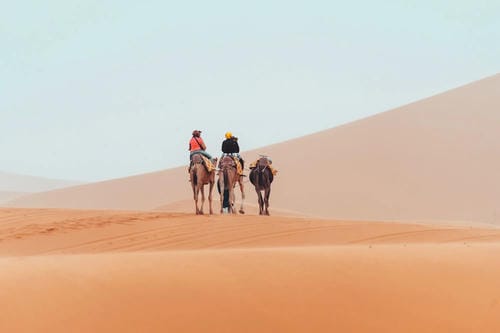
For those seeking a more immersive experience, multi-day trekking offers a compelling alternative. Unlike camel tours, which often follow fixed itineraries, trekking routes can be adapted to specific interests and fitness levels.
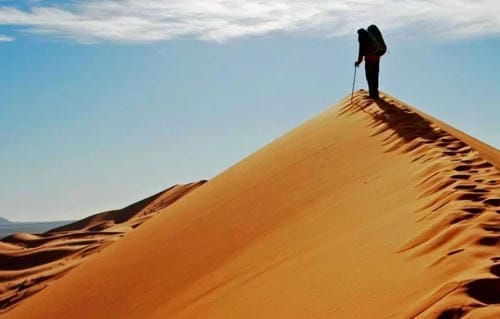
Walking through the Sahara reveals details that are otherwise overlooked. Subtle variations in sand texture, wind patterns, and vegetation become more apparent at a slower pace. This mode of travel also fosters a stronger connection to the environment, as travelers must engage directly with the physical challenges of the landscape.
Logistically, trekking requires careful preparation. Water management, navigation, and weather awareness are critical factors. Nighttime temperatures can drop significantly, even when daytime conditions are warm. Optimal travel periods are typically spring and autumn, when temperatures are more moderate .
The experiential payoff is substantial. Trekking transforms the Sahara from a visual spectacle into a lived environment, where time, distance, and effort are directly perceived.
Adventure Activities Beyond the Expected
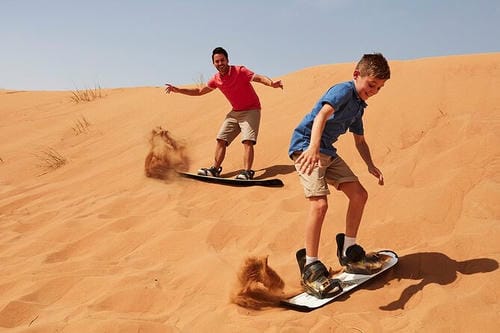
The Sahara’s physical characteristics make it suitable for a range of adventure activities that extend beyond traditional narratives. Sandboarding, for example, leverages the steep slopes of dunes to create a desert analogue of snowboarding. Core characteristics:
● Equipment: waxed sandboards (often provided by camps)
● Optimal time: early morning or late afternoon (sand temperature and density balance)
● Technique similarity: snowboarding mechanics but with increased friction coefficients due to granular substrate
According to regional activity guides, sandboarding is frequently bundled with sunset camel experiences and overnight camping, forming hybrid adventure packages rather than standalone activities. This integration reflects a broader trend: experiential layering rather than single-activity tourism.
Similarly, endurance-based activities such as desert marathons and cycling expeditions have gained popularity among niche travel segments. These activities require significant preparation but offer a unique way to engage with the environment.
The Sahara’s astronomical clarity is one of its least commercialized but most significant assets. The absence of light pollution in regions like Erg Chebbi produces visibility conditions that allow direct observation of the Milky Way with the naked eye.
Common night-based experiences include:
● Guided astronomy sessions using telescopes at luxury camps
● Unstructured stargazing from dune ridges
● Night photography workshops (long exposure desert imaging)
● Cultural storytelling around campfires integrated with celestial observation
Many desert camps explicitly design their layouts to maximize sky visibility rather than landscape enclosure, prioritizing open horizon exposure.
This transforms the desert from a daytime terrain into a 24-hour observational environment.
A practical framework involves combining different modes of travel. For example, a journey might begin with a road trip through southern Morocco, followed by a 4x4 expedition into remote dunes, and conclude with a cultural stay in an oasis community.
This layered approach maximizes exposure to different aspects of the Sahara while avoiding the limitations of single-format tours. It also allows travelers to calibrate their experience, adjusting intensity and complexity as needed.
The key principle is intentionality. Rather than accepting pre-packaged itineraries, travelers should actively design their experience based on clearly defined objectives. This approach transforms the Sahara from a passive destination into an active field of exploration.
(This article is intended for informational purposes only. Travel conditions, safety considerations, and pricing in Morocco may change over time. Readers are advised to verify current information with official tourism authorities or licensed operators before making travel arrangements.)
Updated April 22, 2026
FAQs
Q1: Is it safe to explore the Sahara independently?
Yes, but only with appropriate preparation. Independent travel should include reliable navigation, sufficient supplies, and ideally collaboration with local guides for desert entry points.
Q2: What is the best time to explore the Sahara beyond standard tours?
Spring (March–April) and autumn (October–November) provide the most stable weather conditions, with moderate daytime temperatures and manageable night-time cold.
Q3: Are remote areas like Erg Chegaga worth the extra effort?
For travelers seeking solitude and authenticity, yes. These regions offer a less commercialized experience, though they require more complex logistics.
About Author
Elias Navarro is a field-based travel writer specializing in arid landscapes and cultural geography. With over a decade of experience exploring North Africa and the Middle East, his work focuses on the intersection of environment, tradition, and modern tourism dynamics.
References
[1] Morocco Vibrant. (2025). Tourism statistics in Morocco: 17.2 million visitors in 2024.
[2] Reuters. (2026). Morocco receives 19.8 million tourists in 2025.
[3] Sahara Atlas Tours. (2026). Morocco travel safety guide.
[4] Memento Morocco. (2026). Complete guide to Sahara desert tours.
Explore more in-depth travel strategies and destination analyses on this blog to refine how you experience the world beyond the obvious.
>>>>>>> 944e541ebad74151114cbae6b7f1c9ca1f8a9f02