Adventure Across New Zealand Multi-Sport Expedition Route
<<<<<<< HEADApril 21, 2026
A multi-sport expedition in New Zealand combines alpine trekking, glacier travel, kayaking, cycling, and high-adrenaline adventure hubs like Queenstown into a seamless, terrain-driven journey across some of the most diverse landscapes on Earth.

Estimated Reading Time: 13–15 minutes┃Post by: Rowan Mitchell
The Structure of a Multi-Sport Expedition: Geography as the Itinerary
A multi-sport expedition in New Zealand is defined less by a fixed route and more by how terrain dictates movement. Unlike conventional touring, where destinations are discrete stops, multi-sport travel in New Zealand is engineered as a continuous progression through ecosystems: alpine passes, glacial valleys, rainforest corridors, fjords, and coastal inlets.
The South Island is the primary theater for these expeditions due to its compact but extreme geography. Within a few hundred kilometers, travelers can transition from subtropical coastal zones to glaciated alpine environments exceeding 3,000 meters in elevation. This compression of landforms enables multi-activity sequencing without long inter-regional transfers.
Queenstown functions as the operational nucleus for most itineraries. The region has evolved into a global hub for adventure tourism, offering dense clusters of activities such as canyoning, jet boating, rafting, and via ferrata climbing. Industry data and tour operators consistently position Queenstown and its surrounding basins as the most activity-rich zone in the country, often described as a “high-adrenaline ecosystem” rather than a conventional town.
A typical 10–14 day expedition may integrate the following spatial logic:

This sequencing is not arbitrary. It reflects hydrological flow (rivers to ocean), geological uplift (plains to peaks), and accessibility corridors (roads and alpine passes), which together form the backbone of expedition logistics.
Core Multi-Sport Corridors and Activity Integration
The most established multi-sport expeditions in New Zealand follow a South Island spine running from Christchurch through Aoraki / Mount Cook National Park, Wanaka, Queenstown, Te Anau, and Milford Sound. This corridor is repeatedly used in guided itineraries due to its balance of accessibility and environmental contrast.
In this region, activity stacking is deliberate. A single expedition day might combine cycling in the morning, alpine hiking in the afternoon, and hot spring recovery in the evening. Operators design these sequences to alternate impact load on different muscle groups while maximizing exposure to terrain diversity.
A representative 10-day multi-activity framework in the South Island typically includes:
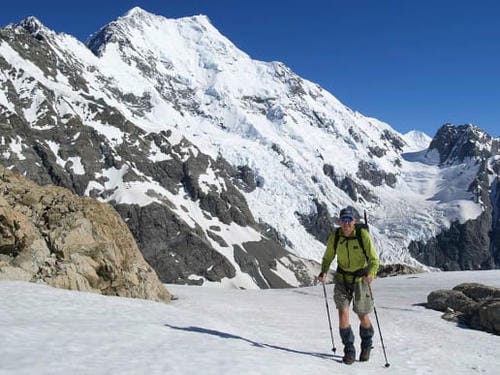
● Alpine trekking in Aoraki / Mount Cook National Park
● Glacier-adjacent hiking near Franz Josef or Fox Glacier
● Cycling sections of the Queenstown Trail network
● Kayaking in Lake Wanaka or Okarito Lagoon
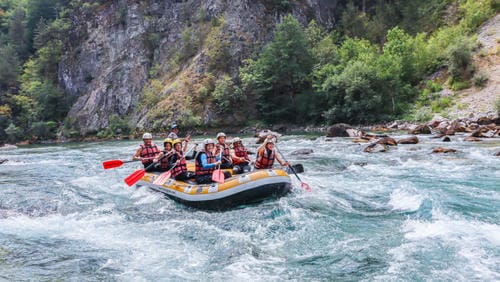
● Jet boating or rafting in Queenstown river systems
● Fiord cruising in Milford Sound

These components are not isolated experiences; they are engineered as physiological and environmental contrasts. For example, glacier hiking requires slow-twitch endurance under cold conditions, while jet boating introduces high-acceleration anaerobic load in river canyons.
Commercial expeditions often integrate logistics-heavy experiences such as Milford Sound cruises, which also function as transfer corridors between Te Anau and coastal fjords. According to tourism operators, these combined adventure itineraries are typically priced between NZD $6,000 and $15,000 depending on duration, inclusions, and guiding level, reflecting the high operational cost of remote-region access and guiding expertise.
Queenstown, in particular, serves as the highest-density activity node. It is widely recognized in tourism literature as the epicenter of New Zealand’s adventure economy, with a dense cluster of commercial offerings spanning bungee jumping, canyon swings, skydiving, and mountain biking networks. This concentration is a key reason many multi-sport expeditions begin or end here.
Expedition Design, Risk Management, and Operational Realities

Multi-sport expeditions in New Zealand are not only physical journeys but also logistical systems constrained by weather volatility, terrain access, and safety infrastructure. The country’s rapid weather shifts—particularly in alpine and fiord regions—require contingency planning at the itinerary level rather than at the daily level.
New Zealand’s adventure tourism industry benefits from a unique regulatory environment, including comprehensive injury coverage through a national no-fault compensation system. This framework has historically supported the growth of high-risk recreational activities by reducing liability exposure for operators and participants.
From an operational standpoint, expeditions must account for:
● Alpine weather windows: Mountain regions such as Aoraki / Mount Cook can shift from clear conditions to whiteouts within hours
● Track accessibility: Sections of Great Walks and alpine passes are seasonally restricted due to snowpack or rainfall
● Hydrological variability: River-based sports such as rafting and canyoning depend on rainfall-driven flow rates
● Transport synchronization: Long-distance road transfers between zones (e.g., Wanaka to Te Anau via Crown Range) require precise timing
A simplified risk-weight matrix used by many guiding operators illustrates relative exposure:

Beyond risk, expedition design emphasizes “adaptive pacing.” Unlike fixed itineraries, multi-sport routes are frequently adjusted in real time. A canceled alpine hike may be replaced with valley cycling or lake-based kayaking, preserving both physiological load and experiential continuity.
Environmental stewardship is also increasingly embedded in expedition frameworks. Many guided programs now include carbon offsetting measures and conservation partnerships, reflecting New Zealand’s broader push toward sustainable tourism models in sensitive alpine and coastal ecosystems.
(This article is for general informational purposes only. Multi-sport expeditions involve inherent risks, including weather, terrain, and physical exertion. Always consult licensed guides and official advisories before participating.)
FQAs
1. How physically demanding is a multi-sport expedition in New Zealand?
It varies significantly by itinerary, but most structured expeditions require moderate to high fitness. Daily activity load typically ranges from 4 to 8 hours of combined movement, with alternating intensity levels to prevent overuse fatigue.
2. Do I need technical skills for activities like glacier hiking or kayaking?
No. Most commercial expeditions are designed for beginners and include guided instruction. Technical gear and safety systems are provided, particularly for glacier travel and rafting segments.
3. What is the best time of year for a multi-sport expedition in New Zealand?
The primary season runs from November to April, corresponding to late spring through early autumn in the Southern Hemisphere. This window offers the most stable weather and maximum access to alpine and coastal routes.
About Author
Rowan Mitchell is an adventure travel writer specializing in expedition logistics, alpine tourism systems, and multi-activity route design across the Southern Hemisphere. With field experience across New Zealand’s South Island and the Patagonian Andes, Mitchell focuses on the intersection of geography, endurance travel, and sustainable tourism infrastructure. Their work emphasizes practical expedition planning grounded in environmental and operational realities.
References
[1] Active Adventures. (2025). Ultimate South Island Adventure.
[2] Adventure Junkies. (2026). 10 Day NZ Adventure Tour.
[3] Silver Beech Outdoors. (2026). Signature Multi-Adventure Tours.
[4] World Expeditions Schools. (2026). New Zealand Multi Activity Adventure.
New Zealand remains one of the world’s most complete natural playgrounds for multi-sport expeditions—continue exploring this blog for more in-depth adventure route breakdowns and planning guides.
=======
April 21, 2026
A multi-sport expedition in New Zealand combines alpine trekking, glacier travel, kayaking, cycling, and high-adrenaline adventure hubs like Queenstown into a seamless, terrain-driven journey across some of the most diverse landscapes on Earth.
Estimated Reading Time: 13–15 minutes┃Post by: Rowan Mitchell
The Structure of a Multi-Sport Expedition: Geography as the Itinerary
A multi-sport expedition in New Zealand is defined less by a fixed route and more by how terrain dictates movement. Unlike conventional touring, where destinations are discrete stops, multi-sport travel in New Zealand is engineered as a continuous progression through ecosystems: alpine passes, glacial valleys, rainforest corridors, fjords, and coastal inlets.
The South Island is the primary theater for these expeditions due to its compact but extreme geography. Within a few hundred kilometers, travelers can transition from subtropical coastal zones to glaciated alpine environments exceeding 3,000 meters in elevation. This compression of landforms enables multi-activity sequencing without long inter-regional transfers.
Queenstown functions as the operational nucleus for most itineraries. The region has evolved into a global hub for adventure tourism, offering dense clusters of activities such as canyoning, jet boating, rafting, and via ferrata climbing. Industry data and tour operators consistently position Queenstown and its surrounding basins as the most activity-rich zone in the country, often described as a “high-adrenaline ecosystem” rather than a conventional town.
A typical 10–14 day expedition may integrate the following spatial logic:
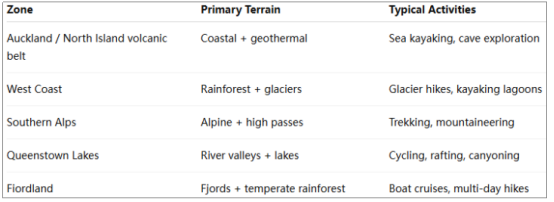
This sequencing is not arbitrary. It reflects hydrological flow (rivers to ocean), geological uplift (plains to peaks), and accessibility corridors (roads and alpine passes), which together form the backbone of expedition logistics.
Core Multi-Sport Corridors and Activity Integration
The most established multi-sport expeditions in New Zealand follow a South Island spine running from Christchurch through Aoraki / Mount Cook National Park, Wanaka, Queenstown, Te Anau, and Milford Sound. This corridor is repeatedly used in guided itineraries due to its balance of accessibility and environmental contrast.
In this region, activity stacking is deliberate. A single expedition day might combine cycling in the morning, alpine hiking in the afternoon, and hot spring recovery in the evening. Operators design these sequences to alternate impact load on different muscle groups while maximizing exposure to terrain diversity.
A representative 10-day multi-activity framework in the South Island typically includes:
● Alpine trekking in Aoraki / Mount Cook National Park
● Glacier-adjacent hiking near Franz Josef or Fox Glacier
● Cycling sections of the Queenstown Trail network
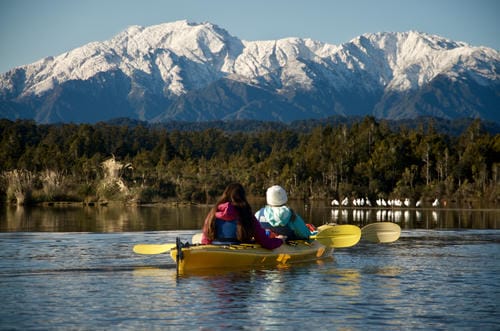
● Kayaking in Lake Wanaka or Okarito Lagoon
● Jet boating or rafting in Queenstown river systems
● Fiord cruising in Milford Sound
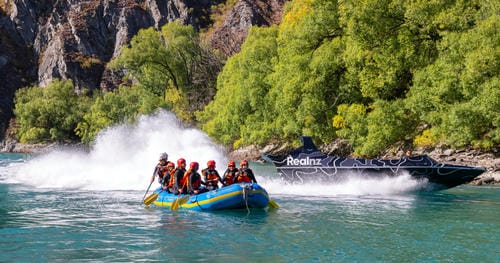
These components are not isolated experiences; they are engineered as physiological and environmental contrasts. For example, glacier hiking requires slow-twitch endurance under cold conditions, while jet boating introduces high-acceleration anaerobic load in river canyons.
Commercial expeditions often integrate logistics-heavy experiences such as Milford Sound cruises, which also function as transfer corridors between Te Anau and coastal fjords. According to tourism operators, these combined adventure itineraries are typically priced between NZD $6,000 and $15,000 depending on duration, inclusions, and guiding level, reflecting the high operational cost of remote-region access and guiding expertise.
Queenstown, in particular, serves as the highest-density activity node. It is widely recognized in tourism literature as the epicenter of New Zealand’s adventure economy, with a dense cluster of commercial offerings spanning bungee jumping, canyon swings, skydiving, and mountain biking networks. This concentration is a key reason many multi-sport expeditions begin or end here.
Expedition Design, Risk Management, and Operational Realities
Multi-sport expeditions in New Zealand are not only physical journeys but also logistical systems constrained by weather volatility, terrain access, and safety infrastructure. The country’s rapid weather shifts—particularly in alpine and fiord regions—require contingency planning at the itinerary level rather than at the daily level.
New Zealand’s adventure tourism industry benefits from a unique regulatory environment, including comprehensive injury coverage through a national no-fault compensation system. This framework has historically supported the growth of high-risk recreational activities by reducing liability exposure for operators and participants.
From an operational standpoint, expeditions must account for:
● Alpine weather windows: Mountain regions such as Aoraki / Mount Cook can shift from clear conditions to whiteouts within hours
● Track accessibility: Sections of Great Walks and alpine passes are seasonally restricted due to snowpack or rainfall
● Hydrological variability: River-based sports such as rafting and canyoning depend on rainfall-driven flow rates
● Transport synchronization: Long-distance road transfers between zones (e.g., Wanaka to Te Anau via Crown Range) require precise timing
A simplified risk-weight matrix used by many guiding operators illustrates relative exposure:
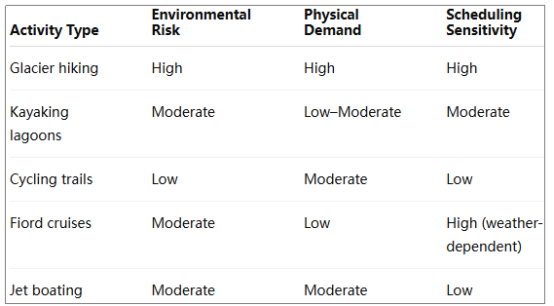
Beyond risk, expedition design emphasizes “adaptive pacing.” Unlike fixed itineraries, multi-sport routes are frequently adjusted in real time. A canceled alpine hike may be replaced with valley cycling or lake-based kayaking, preserving both physiological load and experiential continuity.
Environmental stewardship is also increasingly embedded in expedition frameworks. Many guided programs now include carbon offsetting measures and conservation partnerships, reflecting New Zealand’s broader push toward sustainable tourism models in sensitive alpine and coastal ecosystems.
(This article is for general informational purposes only. Multi-sport expeditions involve inherent risks, including weather, terrain, and physical exertion. Always consult licensed guides and official advisories before participating.)
FQAs
1. How physically demanding is a multi-sport expedition in New Zealand?
It varies significantly by itinerary, but most structured expeditions require moderate to high fitness. Daily activity load typically ranges from 4 to 8 hours of combined movement, with alternating intensity levels to prevent overuse fatigue.
2. Do I need technical skills for activities like glacier hiking or kayaking?
No. Most commercial expeditions are designed for beginners and include guided instruction. Technical gear and safety systems are provided, particularly for glacier travel and rafting segments.
3. What is the best time of year for a multi-sport expedition in New Zealand?
The primary season runs from November to April, corresponding to late spring through early autumn in the Southern Hemisphere. This window offers the most stable weather and maximum access to alpine and coastal routes.
About Author
Rowan Mitchell is an adventure travel writer specializing in expedition logistics, alpine tourism systems, and multi-activity route design across the Southern Hemisphere. With field experience across New Zealand’s South Island and the Patagonian Andes, Mitchell focuses on the intersection of geography, endurance travel, and sustainable tourism infrastructure. Their work emphasizes practical expedition planning grounded in environmental and operational realities.
References
[1] Active Adventures. (2025). Ultimate South Island Adventure.
[2] Adventure Junkies. (2026). 10 Day NZ Adventure Tour.
[3] Silver Beech Outdoors. (2026). Signature Multi-Adventure Tours.
[4] World Expeditions Schools. (2026). New Zealand Multi Activity Adventure.
New Zealand remains one of the world’s most complete natural playgrounds for multi-sport expeditions—continue exploring this blog for more in-depth adventure route breakdowns and planning guides.
>>>>>>> 944e541ebad74151114cbae6b7f1c9ca1f8a9f02