Journey Through Patagonia’s Fjords and Steppe on Two Wheels and a Paddle
<<<<<<< HEADApril 7, 2026
Key Highlights:
● Patagonia is one of the few places on Earth where glacial lakes and rugged mountain trails exist side by side, making true multisport travel practical.
● Combining kayaking and mountain biking allows travelers to access both remote waterways and high-altitude viewpoints in a single itinerary.
● The best routes cluster around Chile’s Aysén region, Torres del Paine, and the Argentine Lake District.
● Seasonal planning is essential due to strong winds, variable precipitation, and limited infrastructure.
● Proper logistics, including transport coordination and gear staging, are critical for a successful multisport journey.

Estimated Reading Time: 13–16 minutes┃Post by: Rowan Caldwell
Patagonia as a Dual-Sport Frontier
Patagonia spans southern Chile and Argentina, forming a vast transitional zone between the Andes and the South Atlantic. The region’s defining feature is not a single landscape type, but the abrupt interlocking of glacial systems, temperate rainforest, steppe plateaus, and fjord networks. This physical heterogeneity is what makes it uniquely suited for combining kayaking and mountain biking within one continuous travel framework.
From a hydrological perspective, Patagonia is dominated by meltwater-fed lakes and river systems originating in the Southern Patagonian Ice Field. These waterways often sit within tens of kilometers of gravel roads and singletrack trails carved through volcanic soil or glacial moraine. In practical terms, this means a traveler can transition from paddling iceberg-filled lakes in the morning to riding exposed ridgelines in the afternoon without leaving the broader basin.

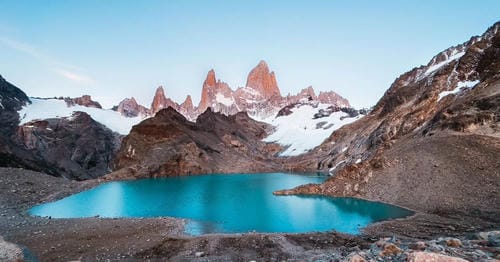
In Chile, kayaking opportunities concentrate in protected fjords, glacier lakes, and braided rivers such as those in Aysén and Torres del Paine, where paddlers can encounter floating icebergs and high-relief granite walls. In Argentina, calmer but wind-prone lakes in the Bariloche and El Chaltén regions provide more accessible flatwater routes, often paired with long-distance gravel cycling on the famed Ruta de los Siete Lagos corridor.
Mountain biking in Patagonia is primarily gravel-based rather than technical singletrack in a classical alpine sense. The region’s road network consists largely of compacted gravel “ripio” roads, ranch access routes, and long-distance highways such as Ruta 40. This creates a natural synergy with kayak logistics: both sports favor modular staging, basecamp travel, and multi-day itineraries built around resupply towns rather than continuous urban infrastructure.
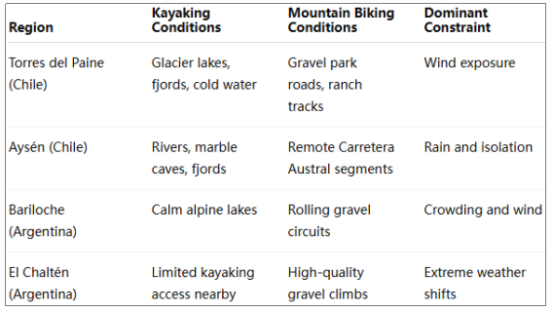
A simplified environmental comparison is shown below:

The critical insight is that kayaking and biking are not separate itineraries in Patagonia—they are spatially complementary expressions of the same terrain system.
Route Design: Building a Multisport Itinerary
Constructing a combined kayaking and mountain biking itinerary in Patagonia requires treating the region as a network of “activity basins” rather than linear routes. Each basin supports one or both sports depending on water accessibility, road density, and wind exposure.
Torres del Paine and Puerto Natales Axis
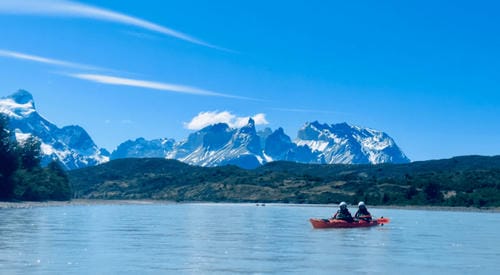
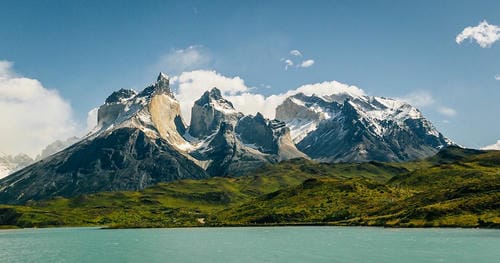
One of the most operationally efficient multisport zones is the Torres del Paine National Park region in Chile. Here, kayaking is typically centered on Lago Grey, Lago Pehoé, and connected river systems influenced by glacial melt from the Southern Patagonian Ice Field. Guided paddling allows close proximity to icebergs and glacier fronts, particularly on Lago Grey, where floating ice masses drift into paddling corridors under stable conditions.

Mountain biking in the same zone occurs along gravel ranch roads and designated park access routes. These are not technical downhill trails but endurance-oriented gravel rides with significant wind resistance. The key advantage of this axis is logistical density: Puerto Natales serves as a staging hub with equipment rental, transport services, and guided tour operators capable of coordinating both kayaking and cycling within a single week-long program. Multi-activity itineraries in this region frequently alternate kayaking days with hiking and biking segments, demonstrating that sport-switching is already embedded in the regional tourism model.
A typical structure here is:
● Day 1–2: Arrival and bike acclimatization rides around park periphery roads
● Day 3: Kayaking on glacial lakes
● Day 4–5: Mixed hiking and gravel biking circuits
● Day 6: Secondary kayaking or river float segments
● Day 7: Buffer and transfer logistics
This pattern reflects a constraint-driven design model where weather windows dictate activity sequencing.
Operational Logistics, Seasonality, and Risk Management
Combining kayaking and mountain biking in Patagonia is not primarily a fitness challenge—it is a systems coordination problem. The limiting factors are weather dynamics, transport infrastructure, and equipment staging.
Seasonal Constraints
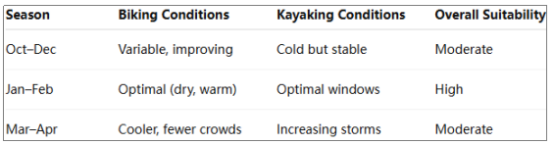
The effective multisport season aligns with the Southern Hemisphere summer window. Cycling conditions are most favorable between October and April, with peak stability in January and February when precipitation is generally lower and daylight hours are extended. Kayaking conditions also improve during this period due to reduced storm frequency, although glacial meltwater systems remain cold year-round.
A simplified seasonal risk profile:

Wind remains a persistent constraint throughout all seasons, particularly in open steppe and lake basins.
Equipment Integration Strategy
Multisport travel requires minimizing redundant gear while maintaining safety across both environments. The central operational challenge is reconciling kayak-specific waterproof systems with bikepacking load distribution.
In practical terms:
● Waterproof dry systems used in kayaking double as pannier liners for biking
● Lightweight synthetic insulation performs across both wet and wind-exposed environments
● Helmet compatibility differs; cycling helmets are not used in kayaks, requiring dual storage solutions
● Transport cases or modular dry bags become essential for mode switching
Transport logistics also matter. Most travelers rely on bus networks between major hubs such as Puerto Natales, Coyhaique, and El Calafate, then use local operators for activity-specific transfers. Rental bikes are often left staged at base towns while kayak trips are conducted as guided excursions.
Risk Factors and Environmental Constraints
The primary risks in combining kayaking and mountain biking in Patagonia are environmental rather than technical.
● Wind exposure can exceed safe biking thresholds in open steppe corridors
● Rapid weather shifts can strand kayakers in fjords or lake systems
● Remote road sections may lack repair or evacuation infrastructure
● Water temperatures are consistently low due to glacial input, increasing hypothermia risk

This necessitates a conservative planning model where buffer days are non-negotiable. Successful multisport itineraries typically allocate 20–30% of total trip time to weather contingency.
A final operational reality is that Patagonia rewards spatial sequencing rather than ambition stacking. The most effective itineraries do not attempt to maximize distance or elevation gain, but instead optimize transitions between water and land systems within a single hydrological basin.
(Information is provided for general guidance only. Conditions in Patagonia can change quickly; verify details locally before traveling. The author assumes no liability for risks, injuries, or losses resulting from use of this content.)
Updated April 14, 2026
FQAs
1. Do I need prior experience in both kayaking and mountain biking to do this in Patagonia?
Not strictly, but at least basic competence in both is recommended. Many kayaking routes are guided, and biking often occurs on gravel roads rather than technical singletrack.
2. Which is harder in Patagonia—kayaking or mountain biking?
It depends on the region. Kayaking is limited by cold water and wind exposure, while biking is constrained by terrain and sustained wind resistance on open roads.
3. Can I do both sports in one day?
Yes, in structured regions like Torres del Paine or Bariloche it is common to combine a morning paddle with an afternoon ride, provided logistics are pre-arranged.
About Author
Rowan Caldwell is an outdoor systems analyst and expedition writer specializing in multisport logistics across South America. With a background in environmental geography and field route planning, Rowan focuses on integrating endurance sports into remote landscapes with an emphasis on safety, efficiency, and terrain-based decision-making. He has spent multiple seasons documenting travel corridors across Chilean and Argentine Patagonia, with a particular interest in kayak-bike hybrid expedition design.
References
[1] Lonely Planet. (2024). 10 of the best outdoor activities in Patagonia.
[2] Swoop Patagonia. (2026). Kayaking in Torres del Paine and Patagonia regions.
[3] Patagonia Bike Trips. (2026). Bikepacking Patagonia Argentina & Chile: Seasonal guidance.
[4] Patagonia Discovery Travel. (2025). Patagonia multisport itineraries in Torres del Paine.
Stay on this blog to explore more advanced multisport expedition guides and route breakdowns across remote wilderness regions.
=======April 7, 2026
Key Highlights:
● Patagonia is one of the few places on Earth where glacial lakes and rugged mountain trails exist side by side, making true multisport travel practical.
● Combining kayaking and mountain biking allows travelers to access both remote waterways and high-altitude viewpoints in a single itinerary.
● The best routes cluster around Chile’s Aysén region, Torres del Paine, and the Argentine Lake District.
● Seasonal planning is essential due to strong winds, variable precipitation, and limited infrastructure.
● Proper logistics, including transport coordination and gear staging, are critical for a successful multisport journey.
Estimated Reading Time: 13–16 minutes┃Post by: Rowan Caldwell
Patagonia as a Dual-Sport Frontier
Patagonia spans southern Chile and Argentina, forming a vast transitional zone between the Andes and the South Atlantic. The region’s defining feature is not a single landscape type, but the abrupt interlocking of glacial systems, temperate rainforest, steppe plateaus, and fjord networks. This physical heterogeneity is what makes it uniquely suited for combining kayaking and mountain biking within one continuous travel framework.
From a hydrological perspective, Patagonia is dominated by meltwater-fed lakes and river systems originating in the Southern Patagonian Ice Field. These waterways often sit within tens of kilometers of gravel roads and singletrack trails carved through volcanic soil or glacial moraine. In practical terms, this means a traveler can transition from paddling iceberg-filled lakes in the morning to riding exposed ridgelines in the afternoon without leaving the broader basin.
In Chile, kayaking opportunities concentrate in protected fjords, glacier lakes, and braided rivers such as those in Aysén and Torres del Paine, where paddlers can encounter floating icebergs and high-relief granite walls. In Argentina, calmer but wind-prone lakes in the Bariloche and El Chaltén regions provide more accessible flatwater routes, often paired with long-distance gravel cycling on the famed Ruta de los Siete Lagos corridor.
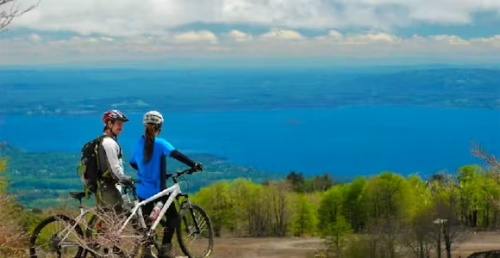
Mountain biking in Patagonia is primarily gravel-based rather than technical singletrack in a classical alpine sense. The region’s road network consists largely of compacted gravel “ripio” roads, ranch access routes, and long-distance highways such as Ruta 40. This creates a natural synergy with kayak logistics: both sports favor modular staging, basecamp travel, and multi-day itineraries built around resupply towns rather than continuous urban infrastructure.
A simplified environmental comparison is shown below:
The critical insight is that kayaking and biking are not separate itineraries in Patagonia—they are spatially complementary expressions of the same terrain system.
Route Design: Building a Multisport Itinerary
Constructing a combined kayaking and mountain biking itinerary in Patagonia requires treating the region as a network of “activity basins” rather than linear routes. Each basin supports one or both sports depending on water accessibility, road density, and wind exposure.
Torres del Paine and Puerto Natales Axis
One of the most operationally efficient multisport zones is the Torres del Paine National Park region in Chile. Here, kayaking is typically centered on Lago Grey, Lago Pehoé, and connected river systems influenced by glacial melt from the Southern Patagonian Ice Field. Guided paddling allows close proximity to icebergs and glacier fronts, particularly on Lago Grey, where floating ice masses drift into paddling corridors under stable conditions.
Mountain biking in the same zone occurs along gravel ranch roads and designated park access routes. These are not technical downhill trails but endurance-oriented gravel rides with significant wind resistance. The key advantage of this axis is logistical density: Puerto Natales serves as a staging hub with equipment rental, transport services, and guided tour operators capable of coordinating both kayaking and cycling within a single week-long program. Multi-activity itineraries in this region frequently alternate kayaking days with hiking and biking segments, demonstrating that sport-switching is already embedded in the regional tourism model.
A typical structure here is:
● Day 1–2: Arrival and bike acclimatization rides around park periphery roads
● Day 3: Kayaking on glacial lakes
● Day 4–5: Mixed hiking and gravel biking circuits
● Day 6: Secondary kayaking or river float segments
● Day 7: Buffer and transfer logistics
This pattern reflects a constraint-driven design model where weather windows dictate activity sequencing.
Operational Logistics, Seasonality, and Risk Management
Combining kayaking and mountain biking in Patagonia is not primarily a fitness challenge—it is a systems coordination problem. The limiting factors are weather dynamics, transport infrastructure, and equipment staging.
Seasonal Constraints
The effective multisport season aligns with the Southern Hemisphere summer window. Cycling conditions are most favorable between October and April, with peak stability in January and February when precipitation is generally lower and daylight hours are extended. Kayaking conditions also improve during this period due to reduced storm frequency, although glacial meltwater systems remain cold year-round.
A simplified seasonal risk profile:
Wind remains a persistent constraint throughout all seasons, particularly in open steppe and lake basins.
Equipment Integration Strategy
Multisport travel requires minimizing redundant gear while maintaining safety across both environments. The central operational challenge is reconciling kayak-specific waterproof systems with bikepacking load distribution.
In practical terms:
● Waterproof dry systems used in kayaking double as pannier liners for biking
● Lightweight synthetic insulation performs across both wet and wind-exposed environments
● Helmet compatibility differs; cycling helmets are not used in kayaks, requiring dual storage solutions
● Transport cases or modular dry bags become essential for mode switching
Transport logistics also matter. Most travelers rely on bus networks between major hubs such as Puerto Natales, Coyhaique, and El Calafate, then use local operators for activity-specific transfers. Rental bikes are often left staged at base towns while kayak trips are conducted as guided excursions.
Risk Factors and Environmental Constraints
The primary risks in combining kayaking and mountain biking in Patagonia are environmental rather than technical.
● Wind exposure can exceed safe biking thresholds in open steppe corridors
● Rapid weather shifts can strand kayakers in fjords or lake systems
● Remote road sections may lack repair or evacuation infrastructure
● Water temperatures are consistently low due to glacial input, increasing hypothermia risk
This necessitates a conservative planning model where buffer days are non-negotiable. Successful multisport itineraries typically allocate 20–30% of total trip time to weather contingency.
A final operational reality is that Patagonia rewards spatial sequencing rather than ambition stacking. The most effective itineraries do not attempt to maximize distance or elevation gain, but instead optimize transitions between water and land systems within a single hydrological basin.
(Information is provided for general guidance only. Conditions in Patagonia can change quickly; verify details locally before traveling. The author assumes no liability for risks, injuries, or losses resulting from use of this content.)
Updated April 14, 2026
FQAs
1. Do I need prior experience in both kayaking and mountain biking to do this in Patagonia?
Not strictly, but at least basic competence in both is recommended. Many kayaking routes are guided, and biking often occurs on gravel roads rather than technical singletrack.
2. Which is harder in Patagonia—kayaking or mountain biking?
It depends on the region. Kayaking is limited by cold water and wind exposure, while biking is constrained by terrain and sustained wind resistance on open roads.
3. Can I do both sports in one day?
Yes, in structured regions like Torres del Paine or Bariloche it is common to combine a morning paddle with an afternoon ride, provided logistics are pre-arranged.
About Author
Rowan Caldwell is an outdoor systems analyst and expedition writer specializing in multisport logistics across South America. With a background in environmental geography and field route planning, Rowan focuses on integrating endurance sports into remote landscapes with an emphasis on safety, efficiency, and terrain-based decision-making. He has spent multiple seasons documenting travel corridors across Chilean and Argentine Patagonia, with a particular interest in kayak-bike hybrid expedition design.
References
[1] Lonely Planet. (2024). 10 of the best outdoor activities in Patagonia.
[2] Swoop Patagonia. (2026). Kayaking in Torres del Paine and Patagonia regions.
[3] Patagonia Bike Trips. (2026). Bikepacking Patagonia Argentina & Chile: Seasonal guidance.
[4] Patagonia Discovery Travel. (2025). Patagonia multisport itineraries in Torres del Paine.
Stay on this blog to explore more advanced multisport expedition guides and route breakdowns across remote wilderness regions.
>>>>>>> 944e541ebad74151114cbae6b7f1c9ca1f8a9f02